


Research Stereo Microscope with Adjustable LED Light for Laboratory and Precision Inspection
When I talk about a stereo microscope with customers, I usually start with one simple question: what do you need to see?
That question sounds basic, but it matters. A Microscope Used for Jewelry Inspection does not always need the same configuration as one used for PCB assembly. A school laboratory has different needs from an industrial quality control department. Even two factories making similar products may use different lighting, sample sizes, working positions, and inspection methods.
Our Research Stereo Microscope with Adjustable LED Light is designed as a practical observation tool for users who need a clear three-dimensional view of Small Parts, solid samples, surface details, and precision components. The stereo optical design provides separate viewing paths for the two eyes, while the adjustable LED light helps the operator control the illumination according to the sample and observation conditions.
I do not look at the microscope as just a magnification device. In real work, the operator needs to locate the sample, see its surface, judge its shape, move or inspect it, and sometimes work on it with tools at the same time. A useful stereo microscope therefore needs a good balance between optical performance, lighting, mechanical stability, and operator comfort.
Professional stereo microscope systems are commonly used for electronics, metals, production, assembly, quality control, life science, and other applications where users need to observe relatively large three-dimensional objects. Evident Scientific describes stereo microscopes as systems that use two optical paths to produce a three-dimensional view of solid specimens.
That basic principle is exactly why this type of microscope remains useful in practical laboratories and workshops.
Our company, Ningbo Huaguang Precision Instrument Co., Ltd., is located in Haishu District, Ningbo. We mainly work with educational microscopes, Industrial Inspection microscopes, professional jewelry inspection microscopes, optical components, and precision injection molding.
Our products are exported to more than 20 countries and regions, including America, Brazil, Germany, the Netherlands, and Japan. For us, this international experience is not just a number. It means we regularly deal with different customer requirements, product configurations, packaging conditions, and delivery arrangements.
The purpose of this Research Stereo Microscope with Adjustable LED Light is straightforward: provide a dependable viewing platform that can be used in Laboratory Research, electronics inspection, jewelry work, precision manufacturing, education, repair, and quality checking.
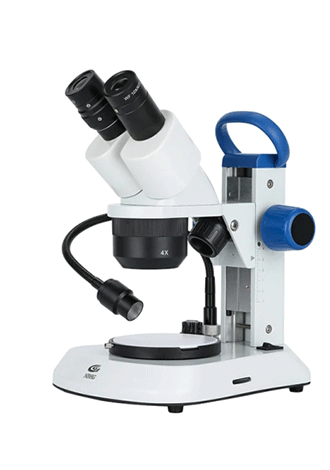
A Stereo Microscope Works in a different way from a conventional compound microscope.
In simple terms, a stereo microscope provides two optical paths, one for each eye. The images reaching the left and right eyes are slightly different. Our brain combines those two views, helping us understand the shape and depth of the object.
This is particularly useful when the sample is a solid object rather than a thin section. If I inspect a metal component, electronic connector, insect, plant sample, jewelry setting, or mechanical part, I often need to see more than a flat surface.
I may need to judge whether an edge is damaged, whether a small part is positioned correctly, whether a surface has a scratch, or whether a component sits above or below another component.
Evident explains that stereo microscopes provide individual observation pathways for each eye, creating a view in which the specimen appears to have depth. The company also notes that stereo microscopes are widely used for electronics, metals, quality control, assembly, and life science work.
This makes stereo observation especially useful for inspection tasks where the operator needs to handle or manipulate the sample during observation.
Imagine inspecting a small connector under a flat image. You may clearly see a line or edge, but judging its actual height can be harder. With stereo observation, the shape of the object is easier to understand.
The same idea applies to jewelry. A gemstone setting has height, curves, edges, and reflective surfaces. A mechanical part may have a hole, groove, chamfer, or raised section. A PCB has components mounted at different heights.
For these jobs, a three-dimensional view can make visual inspection more natural.
| Microscope Type | Typical View | Typical Sample | Practical Use |
|---|---|---|---|
| Stereo Microscope | Three-dimensional view | Solid and relatively large specimens | Inspection, assembly, manipulation, sorting |
| Compound Microscope | High-magnification two-dimensional view | Thin specimens, cells, tissue sections | Cellular and fine biological observation |
| Digital Microscope | Electronic display image | Components and surfaces | Inspection, recording, sharing, documentation |
Source: General comparison based on the microscopy principles and applications described by Evident Scientific. The table is not a comparison of specific commercial models.
For users who need direct binocular observation and hands-on sample manipulation, a stereo microscope can therefore be a very practical choice.
Good optics are important, but lighting can make or break an inspection.
I have seen many inspection situations where the sample itself is not the problem. The problem is the light. A shiny metal surface can reflect too much light. A dark component may need stronger illumination. A small groove can disappear when the lighting direction is wrong.
That is why we include adjustable LED illumination as an important part of this product concept.
The adjustable LED light allows the operator to change the illumination according to the sample and viewing condition. The exact adjustment method depends on the final microscope configuration, but the basic goal remains the same: give the user better control of the light reaching the observation area.
Evident Scientific notes that controlled illumination is important for reliable microscopy results and describes LED illumination systems as offering controlled, stable light. Its stereo microscope lighting systems also include adjustable intensity options.
LED lighting also has practical advantages in routine use. Compared with older lamp technologies, LED systems can offer long service life, lower power consumption, and fast startup. Exact performance depends on the particular LED system and its design.
Different samples reflect light differently.
A black plastic component may absorb much of the light. A polished metal part may reflect a strong highlight directly into the optical path. A transparent or semi-transparent sample may need another illumination arrangement. A PCB may contain both dark and bright surfaces within a very small area.
With adjustable lighting, the operator can make practical changes instead of working with one fixed brightness level.
| Lighting Situation | Possible Observation Problem | Why Adjustable LED Light Helps |
|---|---|---|
| Dark sample | Surface details may be difficult to see | Brightness can be increased when appropriate |
| Reflective metal | Strong highlights may reduce visible detail | Brightness can be reduced or adjusted |
| Small surface defect | Low contrast may hide the defect | Lighting can be adjusted to improve visual contrast |
| Long inspection session | Uncomfortable lighting can affect viewing | Operator can select a more comfortable illumination level |
Source: General illumination principles based on Evident Scientific's microscope illumination guidance and stereo Microscope Application information.
I would not say that simply adding more light always gives a better image. Sometimes too much light makes the image worse. The useful point is control.
When I evaluate a stereo microscope, I pay attention to more than the headline specification.
The optical system needs to produce a clear image. The focusing mechanism needs to move smoothly. The microscope body needs to remain stable. The stand needs to support the working position. The illumination needs to work with the sample. And the operator needs to be able to use the system for a reasonable period without unnecessary discomfort.
These details are easy to overlook when buying equipment online, but they become obvious after the microscope is installed on a workbench.
The binocular configuration allows the user to observe with both eyes. This is one of the defining features of stereo microscopy and supports natural depth perception.
The word “research” should not mean that the microscope is only for universities. In practice, research-oriented stereo microscopes can support many forms of detailed observation, sample preparation, product development, inspection, and laboratory work.
Evident's research stereo microscope systems are used across life science, materials science, production, and quality control applications.
The adjustable LED light provides greater control over the viewing environment. This is useful when working with samples that have different colors, textures, reflectivity, or surface shapes.
For inspection, smooth focusing matters. If the operator needs to repeatedly adjust the focus, the movement should feel controlled rather than loose or unpredictable.
Long inspection sessions can be tiring. The viewing angle, eyepiece position, working height, and operator posture all influence comfort. Advanced stereo microscope systems often include ergonomic features because comfortable observation can support more consistent work. Evident, for example, highlights ergonomic observation arrangements in its research stereo microscope systems.
A microscope should not make it difficult to work on the sample. Stereo microscopes are commonly valued for providing working space that allows users to manipulate solid specimens and components.
For electronics repair, jewelry inspection, small assembly, and laboratory work, that practical space can be just as important as magnification.
One of the biggest advantages of this type of microscope is its wide application range.
Electronics inspection is one of the most common areas where stereo microscopes are useful.
Operators may need to check PCB solder joints, connectors, component placement, wires, surface damage, or small assembly details. The three-dimensional optical view helps the user understand component shape and position, while adjustable LED illumination can make surface details easier to inspect.
For production lines, the microscope can be placed at an inspection or rework station. The operator can inspect the board and use tools around the sample when the microscope configuration provides sufficient working space.
Jewelry is another natural application.
Gold, silver, gemstones, settings, engraving, polishing marks, and tiny surface defects can all require close visual inspection. Because jewelry has complex three-dimensional surfaces, stereo observation is useful when judging shape and position.
Lighting is also important. Highly reflective jewelry can create strong highlights, so the ability to adjust illumination can help the operator find a more useful viewing condition.
Small mechanical components often contain grooves, holes, edges, threads, and machined surfaces that are difficult to inspect with the naked eye.
A stereo microscope can support incoming inspection, process inspection, final quality checking, and repair work.
Medical equipment and small device components may require careful visual inspection during assembly and quality control.
The microscope configuration should always be selected according to the actual component and inspection process. For regulated medical applications, product certification and documentation requirements should also be confirmed before purchase.
A stereo microscope is easy to understand in a classroom because the user can observe a solid object directly through the eyepieces.
Students can examine insects, plants, rocks, small components, and other specimens while learning how magnification, focus, lighting, and depth affect observation.
Materials researchers and production engineers may need to inspect surfaces, fracture areas, coatings, particles, fibers, or small structures.
In these applications, lighting becomes especially important because surface texture is often what the operator is trying to see.
Repair technicians often work with small parts while holding tools in both hands. A stereo microscope can provide a magnified view without turning the task into a purely visual exercise.
This makes it useful for electronics repair, small mechanical repair, precision component maintenance, and similar work.
At Ningbo Huaguang Precision Instrument Co., Ltd., we treat manufacturing as a complete process rather than simply putting optical parts together.
Our company is based in Ningbo and focuses on microscopes, optical components, and precision injection molding. Our product range includes educational microscopes, industrial inspection microscopes, and professional jewelry inspection microscopes.
We also work with different export markets. Our products have been shipped to more than 20 countries and regions, including America, Brazil, Germany, the Netherlands, and Japan.
The production cycle depends on the actual product configuration.
For a standard model, the process can generally be arranged more directly. A customized order may require additional confirmation of optical components, accessories, illumination, mechanical configuration, quantity, and packaging.
That is why I prefer to confirm the configuration before promising a production schedule.
Our general production process includes component preparation, optical and mechanical assembly, focusing adjustment, functional checking, appearance inspection, accessory confirmation, and final packaging.
Before delivery, we check optical performance, focusing, mechanical operation, accessories, appearance, and overall assembly quality.
We also confirm that the delivered configuration matches the agreed order requirements.
For international orders, packaging is another important step. A microscope is a precision product, so protection during transportation matters.
We use cushioning and dust-proof materials, individual product packaging, and reinforced export cartons. The final packing arrangement can be adjusted according to the microscope configuration, quantity, and transportation method.
Depending on destination and order requirements, transportation can be arranged by air freight, sea freight, express delivery, or another suitable logistics method.
Payment follows the agreed order terms, commonly with a deposit and the balance before shipment. The exact terms are confirmed in the quotation and sales agreement.
We understand that overseas customers need more than the microscope itself. They also need correct accessories, product documents, packaging, shipping arrangements, and clear communication.
There are many microscope suppliers in the market, so I believe the useful question is not simply “Who sells a microscope?” The better question is whether the supplier understands your application and can provide a configuration that makes sense.
At Ningbo Huaguang Precision Instrument Co., Ltd., our work covers educational microscopy, industrial inspection, jewelry inspection, optical components, and precision injection molding. This gives us experience with different types of users and working environments.
We also understand that a microscope purchased for laboratory research may need a different setup from one installed beside an electronics production line.
When customers contact us, I recommend sharing several basic details:
What type of sample will you inspect?
What is the approximate sample size?
What is the smallest detail you need to see?
Will the operator need to use tools under the microscope?
How many hours per day will the microscope be used?
What kind of surface or material will be observed?
Do you need adjustable LED illumination?
Do you need additional accessories or a customized configuration?
These questions help us avoid choosing equipment by specification alone.
Our company has supplied information stating that we are certified to the ISO9001 quality management system and that applicable products have CE and RoHS certification. Certification status and documents should always be checked against the specific product and current order before purchase.
Our company credo is “Nothing is perfect only better and better.” In practical terms, we take this to mean continuous improvement in design, manufacturing, inspection, product quality, and after-sales service.
For an overseas B2B customer, stable communication is also part of product quality. If a configuration is not suitable for the application, I would rather discuss it before production than wait until the product reaches the customer's workshop.
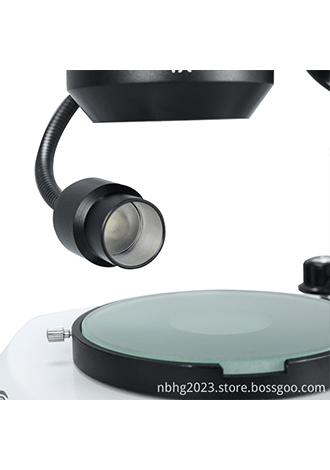
A research stereo microscope is a stereo microscope designed for detailed observation of solid samples and three-dimensional objects. Depending on the configuration, it can be used in laboratory research, materials work, electronics, quality control, production, assembly, and other inspection applications.
The main advantage is its three-dimensional binocular view. A stereo microscope uses separate optical paths for the two eyes, helping the operator understand the shape and depth of a solid object more naturally.
Different samples need different lighting conditions. Adjustable LED illumination lets the operator change the light level according to the surface, color, reflectivity, and inspection task. This can make small surface details easier to see.
Yes. Stereo microscopes are widely used in electronics inspection and assembly. They can help operators observe PCB components, solder joints, connectors, wires, and surface details. The final configuration should be selected according to the board size and inspection process.
Yes. Jewelry is a typical application for stereo observation because gemstones, settings, polished surfaces, engraving, and small mechanical details are three-dimensional. Adjustable illumination can also be useful when working with reflective surfaces.
LED illumination has several practical advantages, including long service life, fast startup, and energy efficiency. Evident also describes LED illumination as providing stable and controllable lighting in microscopy applications. The actual performance depends on the specific illumination system.
No. Magnification is only one part of microscope performance. Field of view, working distance, depth of field, resolution, lighting, and sample size also matter. For many inspection tasks, an excessively high magnification can make it harder to locate and manipulate the sample.
Working distance is the space between the objective and the sample when the image is properly focused. A useful working distance gives the operator room to handle the sample or use tools beneath the microscope.
Reflected illumination sends light onto the surface of the specimen and is useful for opaque objects. Transmitted illumination sends light through the specimen and is more suitable for translucent samples. Evident describes these as two basic illumination approaches in stereo microscopy.
It can be used for laboratory observation and research applications involving solid or three-dimensional samples. The exact suitability depends on the sample, required magnification, illumination method, working distance, and other configuration requirements.
Depending on the model and application, customized configurations can be discussed. We recommend providing sample information, inspection requirements, preferred working conditions, and required accessories before confirming the order.
The production cycle depends on the microscope model, optical configuration, accessories, order quantity, and customization requirements. Standard models can usually be arranged more quickly, while customized products may require additional production time.
We check optical performance, focusing, mechanical operation, accessories, appearance, and overall assembly quality before delivery. We also confirm the agreed product configuration and prepare the required documentation.
We use cushioning and dust-proof protection, individual boxes, and reinforced export cartons. The exact packing method depends on the product configuration and transportation requirements.
The most useful information includes the sample type, sample size, required observation detail, working method, expected quantity, preferred illumination, and any special accessories. If you can provide sample photographs, that can also make the initial discussion easier.
Our Research Stereo Microscope with Adjustable LED Light is designed for users who need more than simple magnification. It combines binocular stereo observation with adjustable illumination to create a practical platform for laboratory research, electronics inspection, jewelry work, precision machinery, education, repair, assembly, and quality control.
For me, the most important point is balance. A microscope should provide a useful image without making the operator fight with the equipment. The optical system, lighting, focusing mechanism, working space, mechanical stability, and operator position all need to work together.
LED illumination adds another useful level of control. When the sample changes, the lighting can be adjusted. When the surface is reflective, the operator can work with a more suitable brightness. When a small detail is difficult to see, better illumination may make the difference.
At Ningbo Huaguang Precision Instrument Co., Ltd., we continue to improve our microscope products based on practical manufacturing experience and customer requirements. We focus on stable quality, useful design, reasonable configurations, and reliable after-sales service.
If you are looking for a Research Stereo Microscope with Adjustable LED Light for laboratory research, electronics inspection, PCB assembly, jewelry inspection, precision manufacturing, education, or quality control, the right configuration should be selected according to the actual sample and working conditions.
That is where we can help. Tell us what you need to inspect, how you work with the sample, and what kind of viewing conditions you require. We can then discuss the suitable microscope configuration, accessories, production requirements, packaging, and delivery arrangement.
Technical reference sources:
Evident Scientific — Stereo Microscopes: research, industrial inspection, electronics, materials, production, and quality control applications.
Evident Scientific — Stereo Microscope Primer: transmitted and reflected illumination principles.
Evident Scientific — Microscope Light Sources and LED Illumination Systems.
Evident Scientific — KL 1600 LED Stereo Microscope Lighting technical reference.
Evident Scientific — SZX10 Research Stereo Microscope System and LED illumination information.
Add: No.70 Zhenxing East Road, Zhangshui Town,Haishu District,Ningbo City,Zhejiang,China
Contact Person: Mr. Xu Contact Number:+86 13777211956
Tel:+86 574-88152588/574-88152566
Fax:+86 574-88152570
Post Code:315161
E-mail:chinahg@hgopt.com

This website uses cookies to ensure you get the best experience on our website.
 中文
中文


 WhatsApp
 Phone
Phone E-mail
 Message