
 中文
中文


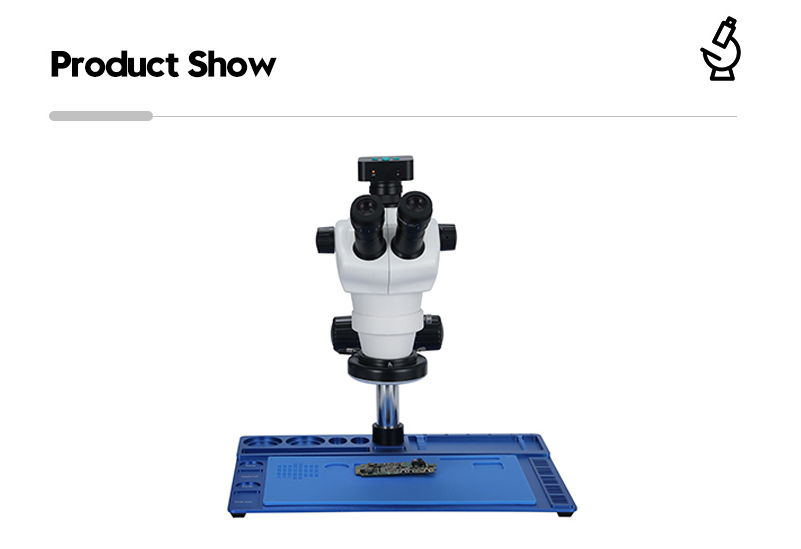
When I choose a Microscope for daily inspection work, I do not look at magnification alone. I also consider how stable the instrument is, how easily the operator can place a sample, whether there is enough room for handling, and how comfortable the microscope will be after several hours of use. These details may seem ordinary, but they often decide whether a microscope is convenient in real production work.
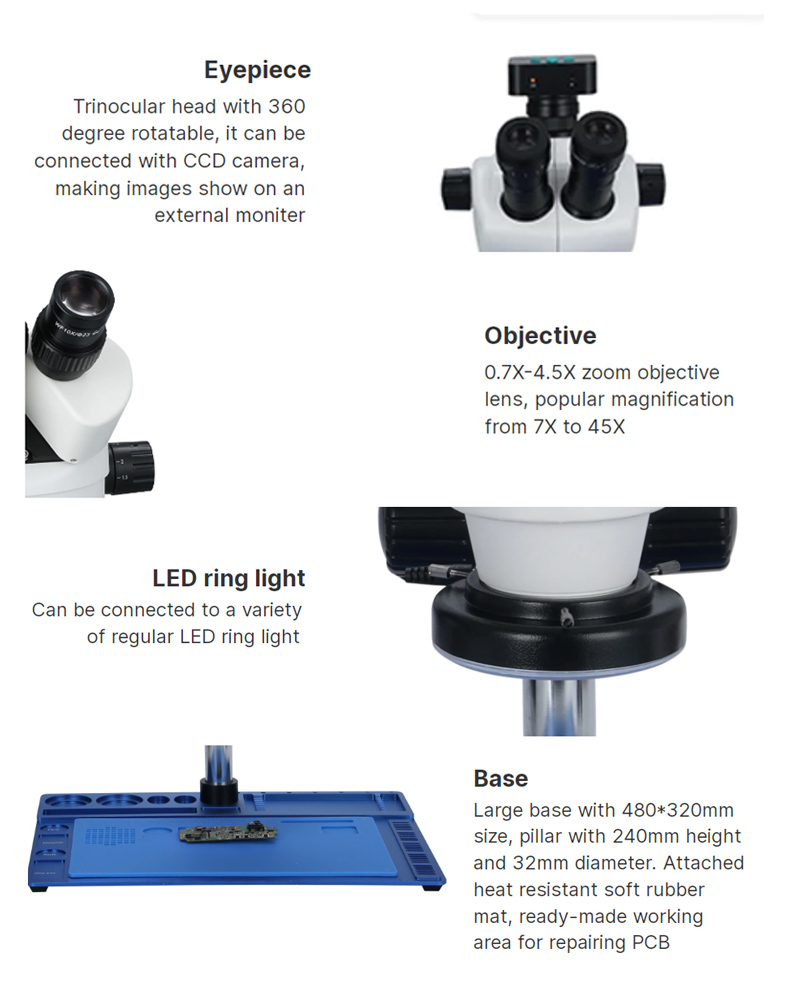
Our Binocular Stereo Microscopes with Large Base are designed for users who need clear three-dimensional observation and dependable support during inspection. The binocular optical design allows comfortable two-eye viewing, while the large base provides a steady platform for the microscope and the samples placed beneath it.
At Ningbo Huaguang Precision Instrument Co., Ltd., we produce educational microscopes, Industrial Inspection microscopes, professional Jewelry Inspection microscopes, optical components, and precision injection molding products. We serve customers in more than 20 countries and regions, including America, Brazil, Germany, the Netherlands, and Japan.
Our experience has taught me that microscope users have different priorities. A jewelry worker may need a comfortable view of small surface details. An electronics technician may need enough room to position a PCB and use repair tools. A school may need a stable microscope that students can operate easily. A quality control department may need repeatable observation from one batch to the next.
For these applications, a large base is not just a design detail. It can make the whole inspection process easier to manage.
1. What Are Binocular Stereo Microscopes with Large Base?
A stereo microscope is designed to observe solid objects with a useful three-dimensional impression. Instead of viewing only a thin prepared specimen, the operator can inspect components, surfaces, edges, holes, grooves, and other physical features of an object.
Our Binocular Stereo Microscopes with Large Base combine three practical elements:
Binocular viewing for comfortable two-eye observation.
Stereo optics for a more natural view of solid objects.
A large base for stable support during inspection and handling.
The binocular head is useful when the operator needs to work for a long period. Looking through both eyes can feel more natural than using one eye only, especially when the microscope is used for repeated inspection tasks.
The stereo optical system helps the user understand the shape and position of the sample. This is useful when checking raised parts, recessed areas, curved surfaces, small edges, and assembly details.
The large base gives the microscope a broad support area. It can help reduce unwanted movement caused by ordinary handling, sample placement, or small working adjustments. The exact stability depends on the complete microscope structure, stand design, base weight, and working conditions, so I recommend confirming the final mechanical configuration before ordering.
I see this microscope as a practical tool for inspection rather than a product made only for laboratory display. It is intended to support real work where the operator needs to see details clearly and keep the sample in a steady position.
2. Why a Large Base Matters in Daily Microscope Work
Many buyers first ask about magnification, but the base is one of the parts that operators notice every day. If the base is too small for the working area, the microscope may feel less convenient when the sample is moved or when tools are used nearby.
A large base can offer several useful benefits.
More Stable Support
During inspection, the operator may touch the sample, move a PCB, adjust a small component, or change the position of a jewelry piece. A broad base provides a stable support platform for the microscope stand.
Stability does not mean that the microscope can never move. It means the structure is designed to provide dependable support during normal use. The final result also depends on the table, floor, sample holder, stand, and operator technique.
More Working Room
A larger base can provide more usable space around the observation area. This can be helpful when inspecting larger parts or when the operator needs to place tools, trays, or samples near the microscope.
For example, a technician working on a circuit board may need to move the board slightly while checking a connector or solder joint. A stable base makes this process easier to control.
Better Sample Positioning
When the sample is placed on a suitable base or stage, the operator can position it more carefully. This is especially important for Small Parts that need to be inspected from different angles.
Useful for Training and Shared Work
In schools and training rooms, microscopes are often handled by different users. A large base can help make the instrument feel more secure when students or new operators adjust the sample and focusing system.
For shared production equipment, a stable base can also support a more consistent working routine. It does not remove the need for proper training, but it can make normal operation easier.
| Base Consideration | Practical Meaning | Possible Benefit |
|---|---|---|
| Base size | Area supporting the microscope structure | More room for positioning and handling |
| Base stability | Resistance to unwanted movement during normal use | More comfortable and controlled inspection |
| Working surface | Area where samples or holders are placed | Better organization of small parts |
| Stand connection | How the microscope is attached to the base | Supports focusing and observation stability |
| Overall footprint | Space occupied on the workbench | Helps users plan the inspection station |
Technical reference: Leica Microsystems and Evident Scientific explain that microscope stability, working distance, sample access, and ergonomic design are important when selecting stereo microscopy equipment.
3. How Binocular Stereo Microscopy Works
The working principle of a stereo microscope is not difficult to understand. The optical system creates two slightly different views of the sample. The observer’s two eyes combine these views, helping the brain understand depth and shape.
This is useful for solid objects because many industrial samples are not flat. A connector may have raised pins. A machined component may have a curved edge. A jewelry piece may contain a stone setting. A plastic part may have a groove or a small surface mark.
When I inspect these objects, I want to understand not only where a mark is located but also how it relates to the surrounding surface. Stereo observation can make this easier than looking at a flat image alone.
Binocular viewing also supports a more comfortable observation method. The operator uses both eyes instead of relying on one eye. Correct interpupillary adjustment is important because the distance between the eyepieces should match the user’s eyes.
Focusing is another important part of the system. The operator needs to bring the target area into clear view without unnecessary movement. Stable focusing is especially useful when the microscope is used for repeated inspection or when the sample must remain in a fixed position.
Magnification should be selected according to the actual inspection task. A higher magnification can reveal smaller details, but it usually provides a smaller field of view. A lower magnification allows the operator to see a wider area and locate the target more easily.
Leica Microsystems and Evident Scientific both identify magnification, field of view, working distance, and depth of field as important factors in stereo microscope selection. These factors should be considered together rather than separately.
| Optical Factor | Simple Explanation | Inspection Importance |
|---|---|---|
| Magnification | How large the object appears | Helps reveal small details |
| Field of view | How much of the sample is visible | Helps locate parts and understand the whole area |
| Working distance | Space between the objective and the sample | Allows room for tools and sample handling |
| Depth of field | Amount of depth that appears acceptably focused | Useful for uneven or three-dimensional objects |
| Binocular viewing | Observation through two optical paths | Supports comfortable two-eye viewing |
Source: Leica Microsystems, “Key Factors to Consider When Selecting a Stereo Microscope”; Evident Scientific, stereo microscope technical guidance.
4. Main Features of Our Binocular Stereo Microscopes with Large Base
Binocular Optical Head
The binocular head is designed for two-eye observation. When the eyepieces are correctly adjusted, the operator can view the sample in a more natural and comfortable way.
This is useful for production lines, laboratories, jewelry workshops, electronics repair stations, and educational environments where the microscope may be used repeatedly throughout the day.
Stereo Observation
The stereo design helps users observe solid objects with depth. It is suitable for parts with different heights, curved surfaces, edges, holes, and other physical structures.
For example, a flat digital image may show a dark mark on a component, but stereo observation can help the operator understand whether the mark is a scratch, a raised point, a recessed area, or a surface feature.
Large Base Structure
The large base is designed to provide dependable support. It can be useful when inspecting samples that need to be placed, moved, rotated, or adjusted beneath the microscope.
The exact dimensions and weight of the base depend on the selected model. For customers who have limited bench space, I recommend confirming the complete footprint before purchase.
Stable Focusing
Stable focusing helps the operator bring the target into view without excessive movement. It is especially useful when the microscope is used for repeated checks or when the operator needs to compare several samples.
Comfortable Inspection
Comfort is not a luxury in inspection work. If an operator feels uncomfortable after a short period, the inspection process may become slower and less consistent.
For this reason, I pay attention to viewing height, eyepiece position, focusing control, sample access, and the arrangement of the workbench. The microscope should fit the operator, not force the operator to work in an awkward position.
Flexible Application Range
Our binocular stereo microscopes can be used in different environments, including electronics assembly, jewelry inspection, precision machinery, medical equipment components, education, laboratories, repair work, and quality control.
The correct accessories and optical configuration depend on the application. A Microscope Used for PCB repair may need a different working arrangement from one used for jewelry or classroom observation.
5. Technical Advantages in Real Inspection Applications
I prefer to describe technical advantages in terms of what the operator can do with the microscope. A specification is useful only when it improves the work.
Clearer Observation of Surface Details
A stereo microscope can help users examine small surface features that are difficult to see with the naked eye. These may include scratches, edges, solder areas, small marks, assembly details, or machining features.
Clear observation depends on the optical system, illumination, sample condition, focusing, and operator adjustment. Good lighting is particularly important because even a good optical system cannot show a poorly illuminated surface clearly.
Better Control During Sample Handling
A large base and suitable working distance can make it easier to handle the sample while observing it. This is useful for repair work and inspection tasks that require small adjustments.
For electronics repair, the operator may need to move a board or use a tool near the inspection area. For jewelry inspection, the operator may need to rotate a piece to check several surfaces.
More Comfortable Two-Eye Viewing
Binocular observation can reduce the need to close one eye during inspection. Correct eyepiece adjustment and suitable working posture are still important, but the binocular design provides a practical starting point for comfortable use.
Useful for Repeated Quality Checks
In quality control, the same type of inspection may be repeated many times. A stable microscope with easy focusing and convenient sample access can help operators follow the same basic inspection routine.
The microscope does not replace a documented inspection standard. Instead, it supports the operator who follows that standard.
Suitable for Different User Levels
A stereo microscope can be used by experienced technicians, students, inspectors, researchers, and workshop staff. The training required depends on the application, but the basic operation is usually easy to understand: place the sample, adjust the viewing position, focus, set the lighting, and inspect the target area.
6. Application Industries and Typical Inspection Tasks
Electronics Assembly and PCB Inspection
Electronics assembly is one of the main application areas for binocular stereo microscopes. Operators may need to inspect circuit boards, connectors, solder joints, small components, wires, and assembly details.
The large base can provide stable support while the operator positions a PCB or small electronic part. Binocular stereo viewing helps the operator understand the shape and position of components, while suitable magnification allows closer inspection of specific areas.
Typical tasks include:
Checking solder joints and connection areas.
Inspecting component placement.
Examining connector pins and small terminals.
Checking surface marks and assembly defects.
Supporting repair and rework activities.
Comparing samples during quality control.
Jewelry Inspection
Jewelry workers need to inspect small details without losing sight of the overall shape of the piece. A stereo microscope can support observation of stones, settings, edges, engraving, polishing marks, and surface workmanship.
The large base can be useful when the jewelry piece needs to be placed securely during inspection. The operator can move or rotate the piece while keeping the microscope stable.
Precision Machinery
Small mechanical components often contain grooves, holes, edges, curves, and machined surfaces. A binocular stereo microscope can help inspectors examine these features before assembly or during final quality checking.
It can also be used for checking burrs, surface damage, small machining marks, and assembly relationships. The exact inspection method depends on the part and the customer’s quality standard.
Medical Equipment Components
Small medical equipment components may require detailed visual inspection during production or assembly. A stereo microscope can support observation of surfaces, connectors, molded parts, and small mechanical features.
For regulated medical applications, the microscope configuration and inspection process should be selected according to the customer’s documented requirements. The microscope itself should not be treated as a substitute for the customer’s validation procedure.
Education and Laboratories
In education, stereo microscopes are useful for observing solid objects such as plant materials, insects, rocks, small parts, and classroom samples.
The binocular head supports comfortable observation, while the large base can make the instrument more stable when used by students. Teachers can use the microscope to explain shape, texture, surface structure, and three-dimensional form.
Repair Workshops
Repair technicians often need to inspect small parts while keeping their hands free for adjustment. A stereo microscope with a stable base can support this type of work.
Possible applications include electronics repair, small hardware checking, instrument maintenance, component sorting, and general workshop inspection.
7. Comparison with Other Microscope Types
Customers sometimes ask whether they should choose a binocular stereo microscope, a Digital Microscope, or a compound microscope. I usually explain that the answer depends on the sample and the working method.
A compound microscope is often used for very small specimens and high-magnification laboratory work. A stereo microscope is generally more suitable for solid objects that need to be handled or inspected from different angles.
A digital microscope with a screen can be convenient for shared viewing and image recording. However, the optical design, depth perception, working distance, and handling experience may differ from a binocular stereo microscope.
| Microscope Type | Main Viewing Method | Common Application | Important Consideration |
|---|---|---|---|
| Binocular Stereo Microscope | Two-eye stereo observation | Parts, electronics, jewelry, assembly | Depth perception and sample handling |
| Digital Microscope with Screen | Image displayed on a screen | Shared inspection, teaching, documentation | Screen and camera configuration |
| Compound Microscope | High-magnification optical observation | Prepared specimens and laboratory samples | Usually less convenient for large solid objects |
| Simple Magnifier | Direct enlarged view | Basic visual checking and hobby use | Limited control and optical performance |
Source: Leica Microsystems and Evident Scientific technical information on stereo microscopes, compound microscopes, digital microscopy, magnification, and working distance.
For customers who need a microscope for electronics, jewelry, precision components, or repair work, I normally recommend starting with the sample and the working process. The correct instrument is the one that allows the operator to see the necessary details while keeping the sample easy to handle.
8. How We Manage Production and Quality Inspection
Our production cycle depends on the microscope model, optical configuration, accessories, order quantity, and customization requirements. Standard models can usually be arranged faster, while customized orders may need additional production time.
Before production, we confirm the main requirements with the customer. These may include:
Application and sample type.
Required magnification range.
Binocular optical configuration.
Base size and working area.
Stand and focusing arrangement.
Accessories and illumination.
Packaging and delivery requirements.
This confirmation step helps avoid misunderstandings. For example, a customer may say “large base,” but the actual requirement may involve a specific sample size, a particular working distance, or a limited workbench area. These details should be discussed before the order is finalized.
During assembly, optical components and mechanical parts are fitted according to the agreed configuration. The focusing mechanism, stand connection, base structure, and accessories need to work together as one system.
Before delivery, we check optical performance, focusing, mechanical operation, accessories, appearance, and overall assembly quality. We also check whether the delivered configuration matches the order requirements.
For customized orders, the inspection points may be adjusted according to the agreed technical details. If the customer requires specific documents, those documents are prepared according to the applicable order and product requirements.
9. Packaging, Delivery and International Service
A microscope is a precision instrument, so packaging is an important part of the delivery process. A product that is assembled correctly still needs suitable protection during transportation.
We use cushioning and dust-proof materials to protect the microscope and its accessories. Each microscope is packed in an individual box and then placed in reinforced export cartons.
This packaging method is intended to reduce transportation risks caused by vibration, handling, movement, and long-distance shipping. The final packing method may depend on the microscope size, accessories, order quantity, and transport method.
Transportation can be arranged by air freight, sea freight, express delivery, or another suitable logistics method. The choice depends on the destination, delivery schedule, order volume, and customer preference.
Payment is arranged according to the order agreement. A common arrangement is a deposit followed by the balance before shipment, but the exact terms are confirmed during the quotation and order process.
Delivery normally includes the agreed microscope configuration, accessories, user documents, and applicable inspection or certification documents. Customers should confirm the packing list and document requirements before shipment, especially when ordering a customized configuration.
10. Why Choose Ningbo Huaguang Precision Instrument Co., Ltd.?
We are located in Haishu District, Ningbo, with convenient transportation and a practical manufacturing environment. Our company focuses on educational microscopes, industrial inspection microscopes, professional jewelry inspection microscopes, optical components, and precision injection molding.
Our products have been exported to more than 20 countries and regions, including America, Brazil, Germany, the Netherlands, and Japan. Working with international customers has helped us understand the importance of clear communication, stable quality, correct documents, and reliable packaging.
We do not believe that one microscope configuration can meet every application. That is why we prefer to discuss the customer’s actual work before recommending a product.
For Binocular Stereo Microscopes with Large Base, I normally want to understand:
What type of sample will be inspected?
What is the approximate sample size?
Does the operator need to use tools during observation?
How much working space is available?
Will the microscope be used for short checks or long daily sessions?
Is direct binocular viewing required?
Are special accessories or documents needed?
These questions help us discuss a practical configuration instead of selecting specifications only from a product name.
Our company has been certified to the ISO9001 quality management system according to the company information supplied for our business. Our product information also includes CE and RoHS certification. The exact certification documents and applicability should be confirmed for the current microscope configuration before purchase.
Our company credo is “Nothing is perfect only better and better.” We apply this idea to product design, manufacturing, inspection, communication, and after-sales service.
11. Frequently Asked Questions
What are Binocular Stereo Microscopes with Large Base used for?
They are used for observing solid objects and small details in applications such as electronics assembly, PCB inspection, jewelry inspection, precision machinery, medical equipment components, education, laboratories, repair work, and quality control.
What is the benefit of a Binocular Microscope?
A binocular microscope allows the user to observe through both eyes. With correct eyepiece adjustment, it can provide a more comfortable viewing experience during repeated inspection tasks.
Why choose a microscope with a large base?
A large base provides a broad support area for the microscope structure. It can improve working stability, provide more room for sample positioning, and support inspection tasks that involve handling or moving parts.
Does a large base mean the microscope is suitable for every sample?
Not automatically. The base must be considered together with the stand, working distance, sample size, optical configuration, and available workbench space. We recommend confirming the complete configuration according to the application.
Can this microscope be used for PCB inspection?
Yes. Binocular stereo microscopes are widely used for PCB inspection, electronics assembly, component checking, solder joint observation, repair, and rework. The final configuration should match the size and inspection method of the PCB.
Can it be used for jewelry inspection?
Yes. The stereo viewing system is suitable for observing jewelry surfaces, stone settings, edges, engraving, polishing marks, and small workmanship details.
Is this microscope suitable for students?
It can be suitable for educational use when the selected configuration matches the teaching purpose. The binocular head and stable base can make the microscope practical for classroom observation and science activities.
What should I confirm before ordering?
You should confirm the microscope model, magnification, optical configuration, base size, stand type, working distance, illumination, accessories, packaging, delivery time, payment terms, and required documents.
How long is the production cycle?
The production cycle depends on the model, optical configuration, accessories, order quantity, and customization requirements. Standard models can usually be arranged faster than customized orders.
How do you inspect the microscope before shipment?
We check optical performance, focusing, mechanical operation, accessories, appearance, and overall assembly quality before delivery.
How is the microscope packed?
The microscope is protected with cushioning and dust-proof materials, packed in an individual box, and then placed in reinforced export cartons for international transportation.
Can you provide customized configurations?
Customization depends on the selected microscope model and the requested components. We can discuss the application, optical requirements, accessories, quantity, packaging, and delivery needs before confirming the order.
Conclusion
When I look at a microscope for industrial or educational use, I want to know whether it will make the operator’s work easier. Clear optics are important, but they are only part of the complete experience. The base, stand, focusing system, working distance, sample access, and viewing comfort all matter.
Our Binocular Stereo Microscopes with Large Base are designed for stable and practical observation of solid objects and small details. The binocular optical system supports comfortable two-eye viewing, while the large base provides dependable support during inspection and sample handling.
These microscopes can be used for electronics assembly, PCB inspection, jewelry, precision machinery, medical equipment components, education, laboratories, repair work, and quality control. The best configuration depends on the sample, the working method, and the environment where the microscope will be installed.
At Ningbo Huaguang Precision Instrument Co., Ltd., we focus on practical microscope design, stable product quality, careful inspection, export packaging, and responsive service. If you are looking for binocular stereo microscopes with large base, please share your application, sample size, required magnification, and working conditions with us. We can then discuss a suitable configuration based on your actual inspection needs.

 WhatsApp
 Phone
Phone E-mail
 Message