

Binocular Microscope WF10x/20mm Digital Microscope for Clear Observation and Precision Inspection
When I design a microscope product page, I do not want to describe a microscope with a long list of technical words and leave the buyer wondering how it will actually work on the job. For me, a good microscope should first answer a simple question: can it help people see small details clearly, operate it without unnecessary trouble, and complete inspection work more efficiently?
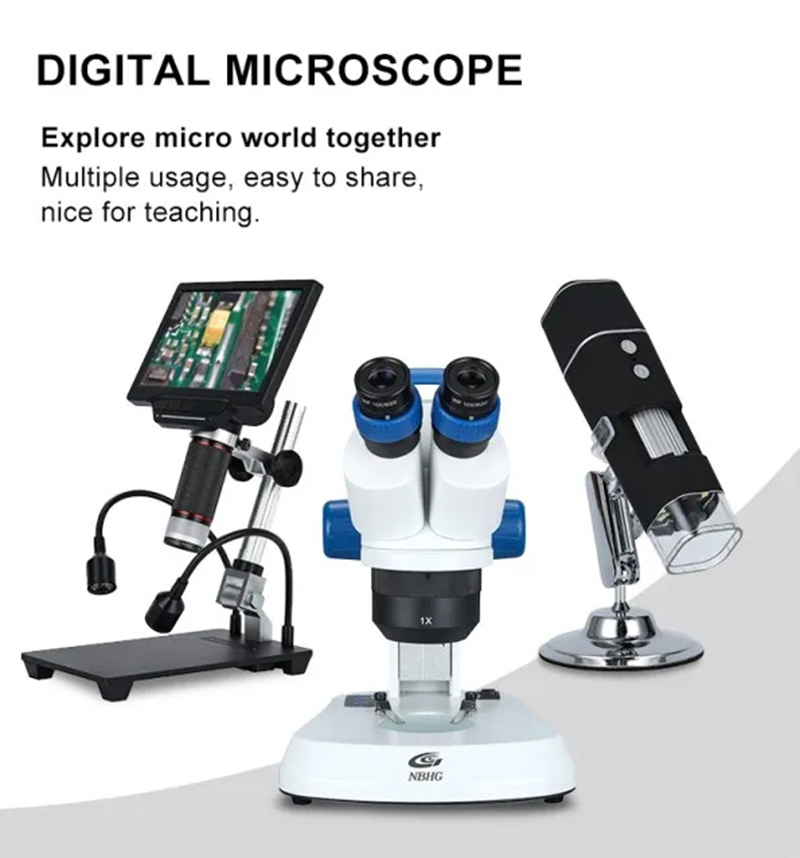
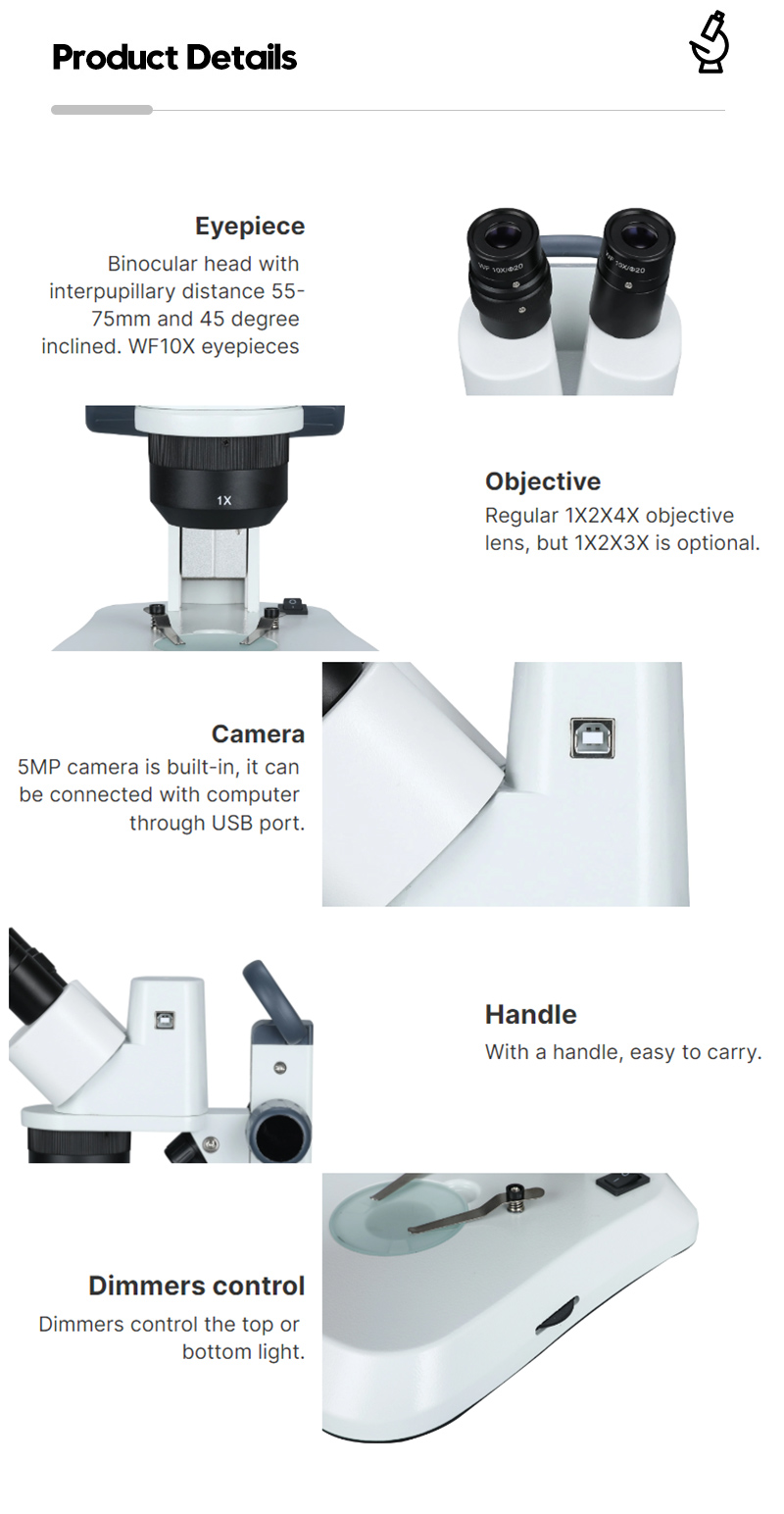
Our Binocular Microscope WF10x/20mm Digital Microscope is designed around this practical idea. It combines binocular optical observation with digital imaging, giving users two useful ways to observe a sample. The optical system supports direct viewing through the binocular eyepieces, while the digital camera and display system allow enlarged details to be viewed on a screen.
This configuration is useful when an operator needs more than simple magnification. In a laboratory, the microscope can support routine observation. In an electronics workshop, it can help users examine small components and circuit details. In education, a digital display makes it easier for several people to look at the same image. In quality control, digital imaging can also make observation and record keeping more convenient.
At Ningbo Huaguang Precision Instrument Co., Ltd., we manufacture educational microscopes, Industrial Inspection microscopes, professional Jewelry Inspection microscopes, optical components, and precision injection molded parts. Our products are supplied to customers in more than 20 countries and regions, including America, Brazil, Germany, the Netherlands, and Japan.
I see this WF10x/20mm Digital Microscope as a practical solution for buyers who want binocular observation together with digital viewing rather than relying on a traditional eyepiece-only microscope.
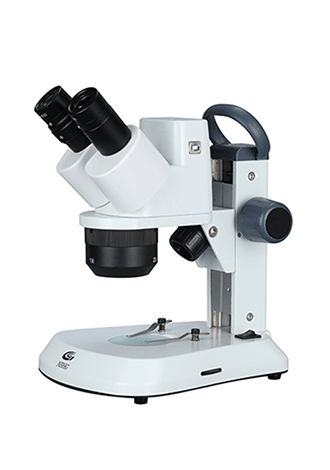
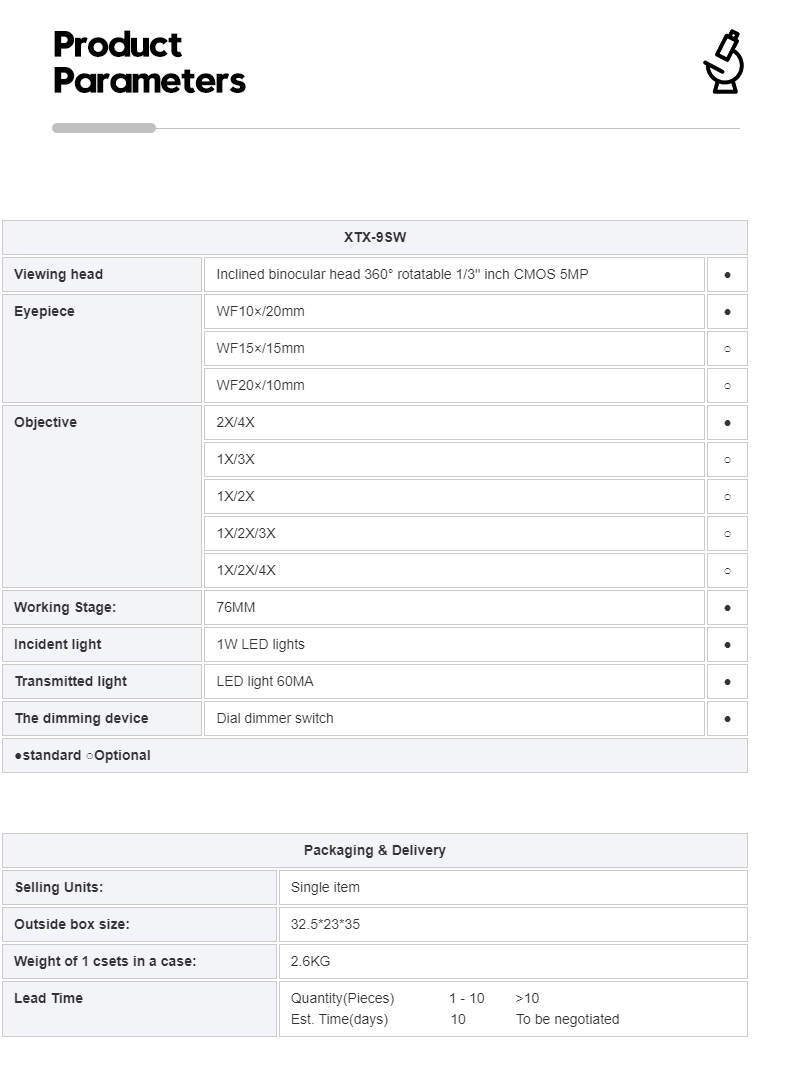
The name tells us several important things about the product. “Binocular” means the microscope uses two optical paths for viewing. Instead of looking through a single eyepiece, the user observes through a pair of eyepieces. “WF10x/20mm” identifies the eyepiece configuration, while “digital microscope” indicates that a camera and digital display system are part of the observation setup.
For everyday inspection, this combination is quite useful. The binocular optical path gives the operator a familiar direct-viewing experience. At the same time, the digital camera can send the image to a display system, allowing the operator to observe enlarged details on a screen.
I would not describe this product simply as a microscope with a camera attached. The real value is the combination of optical observation and digital observation. Different users can choose the viewing method that fits the task.
For example, when I am checking a small component and need to move my eyes naturally with the sample, binocular viewing is convenient. When I need another person to see exactly what I am looking at, the digital display becomes more useful. When an inspection image needs to be captured for reference, the camera system provides another practical option.
| Configuration Aspect | Binocular Microscope WF10x/20mm Digital Microscope | Traditional Eyepiece-Only Microscope |
|---|---|---|
| Optical viewing | Binocular observation | Direct eyepiece observation |
| Digital imaging | Integrated digital camera system | Depends on additional equipment |
| Screen viewing | Supported by the digital display system | Not normally part of the basic configuration |
| Image recording | Convenient when supported by the selected camera system | Usually requires additional imaging equipment |
| Typical use | Inspection, education, laboratory work, electronics, quality control | Routine optical observation |
Source: Ningbo Huaguang Precision Instrument Co., Ltd. product configuration and application information. Actual functions depend on the selected microscope and camera configuration.
One point is important here: WF10x/20mm should not be treated as a complete statement of the microscope's total magnification. Total magnification depends on the complete optical configuration. That is why I prefer to discuss the actual configuration with customers before an order is confirmed instead of giving a single number that may not represent the complete system.
The working process is easier to understand than many microscope catalogs make it sound. Light illuminates the sample, the optical system collects the reflected or transmitted light, and the microscope enlarges the image so the user can observe details that are difficult to see with the naked eye.
In the binocular optical path, the enlarged image is directed toward the two eyepieces. The user can then observe the sample directly. This is particularly useful for routine inspection because the operator can look through the eyepieces and adjust the focus while working.
The digital part works alongside the optical system. A camera receives the optical image and converts it into digital image data. The image can then be displayed on a compatible screen or digital viewing system. Depending on the camera configuration, users may also be able to capture images for inspection records, teaching materials, product development, or internal quality documentation.
In practical terms, the workflow is straightforward:
Place the sample in the observation area.
Adjust the microscope position and focus.
Observe the sample through the binocular eyepieces.
Use the digital camera and display when screen viewing is required.
Capture useful images when digital records are needed.
Make inspection or observation decisions based on the enlarged image.
I like this type of setup because it does not force every user into one working method. Some people naturally prefer eyepiece observation. Others prefer a large screen. In a teaching room or workshop, screen viewing can also make communication easier because several people can see the same enlarged image at the same time.
The exact digital functions depend on the camera and display configuration selected for the order. This is important for B2B buyers because a microscope intended for simple classroom demonstration does not necessarily need the same camera setup as one used for industrial inspection.
The binocular design is one of the key features of this microscope. Two-eye observation provides a natural way to view the sample and is well suited to repeated inspection work. For users who spend a significant amount of time looking through a microscope, the viewing experience matters just as much as the basic magnification.
The WF10x/20mm configuration provides a clear reference point when discussing the optical setup with buyers. It helps us communicate the microscope configuration more accurately and avoid vague descriptions.
The digital imaging system gives the microscope another useful working mode. Instead of keeping every observation inside the eyepiece, users can view the image on a screen. This is particularly practical when several people need to discuss the same sample.
Clear imaging is the basic requirement of any inspection microscope. A microscope may have impressive specifications on paper, but if the image is difficult to focus or details are not easy to distinguish, the specification list does not help much. We therefore pay attention to optical alignment, focusing operation, camera performance, and the complete assembly.
I prefer a microscope that an operator can understand quickly. The basic process should be simple: place the sample, adjust the position, focus the image, and inspect the details. This is especially useful for schools, training centers, workshops, and production environments where different people may use the same microscope.
The same basic digital microscope platform can be used for many inspection tasks. Electronics, precision machinery, jewelry, medical equipment components, biological samples, education, product development, and quality control can all require enlarged visual observation.
| Application | Typical Observation Need | Useful Microscope Function |
|---|---|---|
| Electronics inspection | Small components, boards, connectors and surface details | Magnified optical viewing and digital display |
| Jewelry inspection | Fine surface details and small decorative features | Clear binocular observation and image viewing |
| Laboratory work | Small samples and routine visual examination | Stable focusing and digital observation |
| Education | Demonstration and shared observation | Screen-based digital viewing |
| Quality control | Visual checking of products and components | Magnified inspection and optional image recording |
| Product development | Checking details during design and sample evaluation | Flexible optical and digital observation |
Source: Ningbo Huaguang Precision Instrument Co., Ltd. application information. The suitable working range depends on sample size, microscope configuration, lighting, camera selection, and inspection requirements.
One of the most common problems in small-object inspection is communication. Imagine one technician sees a tiny mark through the eyepiece and asks a colleague to take a look. The colleague has to stand in the same position, adjust their eyes, and find the same point. That can be slow.
A digital display changes this process. The enlarged image can be shown on a screen, allowing people around the microscope to look at the same area. For training, this can be even more useful because an instructor can demonstrate a detail while students follow the same image.
Digital imaging is also helpful when a company needs a visual reference. A captured image can support internal discussion, product development, inspection records, or customer communication, subject to the selected camera and software functions.
That does not mean digital viewing should replace the binocular eyepieces in every situation. I see the two systems as complementary. Direct optical observation remains useful for fast hands-on work, while digital viewing adds flexibility and easier sharing.
For B2B buyers, this balance is important. A microscope should fit the workflow instead of forcing the workflow to fit the microscope.
| Point of Comparison | Binocular Optical Viewing | Digital Viewing |
|---|---|---|
| Main purpose | Direct observation by the operator | Screen-based observation |
| Best suited to | Hands-on inspection and routine work | Shared viewing, teaching and digital records |
| User interaction | Operator observes through eyepieces | Users observe the camera image on a display |
| Image sharing | Limited to the person using the eyepieces | More convenient for groups |
| Recording | Not normally inherent to direct optical viewing | Available when the camera system supports capture |
Source: Ningbo Huaguang Precision Instrument Co., Ltd. product design information. Digital recording functions depend on the selected camera, display and software configuration.
I would not limit the Binocular Digital Microscope to one industry. Its value comes from the fact that many industries need to inspect small details without requiring a highly specialized microscope for every individual task.
Electronic components can be small enough that ordinary visual inspection becomes difficult. A digital inspection microscope can help operators examine circuit boards, connectors, soldered areas, component surfaces, and other small details.
For electronics workshops, the ability to move between binocular viewing and screen viewing is useful. A technician can inspect directly, then show the same area to another team member when discussing a problem.
Small mechanical parts often need visual checks during assembly and quality control. Surface marks, edges, machining details, small holes, and component interfaces can all benefit from magnified observation.
The microscope is not intended to replace dimensional measuring equipment. Instead, I position it as a practical visual inspection tool that can sit alongside other quality-control instruments.
Jewelry inspection requires attention to small surface details. A microscope can help users observe stones, settings, surface finishes, small marks, and other details that are difficult to see clearly with the naked eye.
Digital viewing is also convenient when a customer, designer, or quality inspector needs to look at the same area together.
Schools, training centers, and laboratories often have another requirement: several people may need to see the same sample. A digital microscope can make classroom demonstrations and group observation easier because the enlarged image can be shown on a display.
For laboratory users, the exact microscope configuration should be selected according to the sample type and observation method. We can discuss the intended application before confirming the order.
Small components used in medical equipment may require careful visual inspection during manufacturing or assembly. Our microscope can be used for visual examination of suitable components, but it should not be treated as a medical diagnostic device unless a particular model has been designed, tested, and certified for that purpose.
During new product development, engineers often need to look closely at prototypes and samples. A digital microscope can make this process more convenient by providing enlarged observation without requiring a large inspection system.
For quality-control teams, the microscope can be part of a broader inspection process. Visual microscopy is especially useful when the defect or feature can be identified through surface or structural observation.
A microscope is not simply a collection of optical parts assembled into a housing. Small differences in assembly can affect the final viewing experience, so I pay attention to the complete production process.
We first prepare the optical, mechanical, digital, and structural components according to the confirmed product configuration. For customized orders, this step is especially important because different camera or accessory requirements can change the final assembly.
The mechanical structure is assembled carefully so the microscope can operate smoothly. Focusing and positioning functions need to work properly because even a good optical system is difficult to use if mechanical adjustment is unstable.
The optical components are assembled and checked as part of the complete microscope. We pay attention to image clarity and focusing performance rather than checking components only as separate parts.
The camera and related digital components are installed according to the agreed configuration. The digital image is then checked to make sure the camera system works correctly with the microscope.
Before shipment, our inspection process covers assembly quality, optical performance, focusing and mechanical functions, camera operation, accessories, appearance, and packaging.
This is where our approach is quite practical. We do not want a product to look good only when it leaves the assembly bench. We want the complete unit to arrive in a condition that makes sense for the buyer's actual application.
After inspection, the microscope is protected with cushioning and dust-proof materials. An individual box is used, followed by reinforced export packaging. The purpose is simple: reduce the risk of damage during handling and transportation.
| Production Stage | What We Check | Purpose |
|---|---|---|
| Component preparation | Optical, mechanical and digital components | Match the confirmed configuration |
| Mechanical assembly | Structure, focusing and movement | Support stable operation |
| Optical assembly | Image and focusing performance | Support clear observation |
| Digital installation | Camera and display operation | Confirm digital imaging functions |
| Final inspection | Function, accessories, appearance | Confirm product readiness |
| Packaging | Cushioning and export carton | Reduce transportation risk |
Source: Ningbo Huaguang Precision Instrument Co., Ltd. production and pre-shipment inspection information.
When buying an industrial or Laboratory Microscope from overseas, the product itself is only one part of the decision. The supplier's communication, production control, documentation, packaging, and after-sales service also matter.
Ningbo Huaguang Precision Instrument Co., Ltd. is located in Haishu District, Ningbo, Zhejiang, an area with convenient transportation. Our business covers educational microscopes, industrial inspection microscopes, professional jewelry inspection microscopes, optical components, and precision injection molding.
We have supplied products to more than 20 countries and regions, including America, Brazil, Germany, the Netherlands, and Japan. International orders require more than simply making a product. The configuration needs to be confirmed clearly, documents need to match the order, and packaging needs to be suitable for long-distance transportation.
We also have experience developing nanometer photocatalytic air purifiers and air-conditioning purification equipment. This wider manufacturing background gives our team experience in product development, component assembly, quality control, and production management.
Our company has been certified to a quality management system. As of September 2026, the current edition of the international quality-management standard is ISO 9001:2026, which was published on September 16, 2026. ISO describes the standard as a framework for establishing, maintaining, and continually improving a quality management system.
Our company information also states that our products have CE and RoHS certifications. For an international order, the exact applicable documentation should always be confirmed according to the selected model, market, and product configuration rather than assuming every configuration carries exactly the same documents.
Our working idea is expressed in our company credo: “Nothing is perfect only better and better.” I take this as a practical reminder. There is always room to improve product design, production details, inspection procedures, packaging, and customer service.
For a standard order, the basic process is straightforward:
We receive the customer's application and microscope requirements.
We confirm the optical configuration, camera, display, accessories, and other details.
We provide the agreed product configuration and commercial terms.
Production is arranged after order confirmation.
The microscope is assembled and inspected.
Accessories and documentation are prepared.
The product is securely packaged for shipment.
Transportation is arranged by air freight, sea freight, express delivery, or another suitable method.
The production cycle depends on the model, camera configuration, order quantity, component availability, and customization requirements. Standard products are generally easier to arrange than highly customized orders, so I recommend confirming the required configuration before setting a delivery schedule.
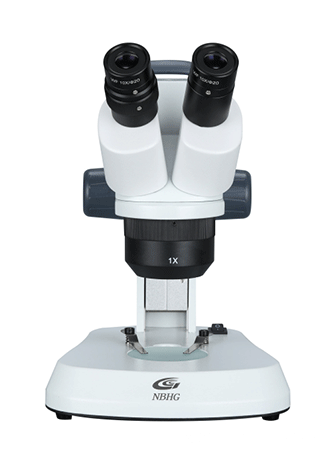
WF10x/20mm refers to the eyepiece configuration. “10x” identifies the nominal eyepiece magnification, while “20mm” refers to the stated field-of-view specification associated with the eyepiece. It should not be confused with the total magnification of the complete microscope system.
It is both. The product combines a binocular optical viewing system with digital camera and display functions. Users can observe through the binocular eyepieces and use the digital system when screen viewing or image capture is required.
Yes. Electronics inspection is one of the practical applications for this type of digital microscope. It can be used to observe suitable circuit boards, electronic components, connectors, and other small details. The final configuration should be selected according to the size and inspection requirements of the samples.
Yes, when the microscope is configured with a suitable display system. The digital image can be shown on a screen, making group observation easier than having every person look through the eyepieces separately.
The digital camera system is designed to support convenient digital imaging, and image capture depends on the selected camera and software configuration. If image documentation is important to your application, we recommend confirming the required camera and software functions before placing the order.
Yes. It can be used for suitable laboratory observation tasks, education, research support, and routine visual inspection. However, the correct optical configuration should be selected according to the sample, required magnification, lighting method, and observation purpose.
We can discuss customized configurations according to the application, camera requirements, accessories, order quantity, and other project conditions. Customized orders may require a different production cycle from standard models.
Before shipment, we check assembly quality, optical performance, focusing and mechanical functions, camera operation, accessories, appearance, and packaging. The exact inspection documents depend on the confirmed product and order requirements.
We use cushioning and dust-proof materials, an individual box, and reinforced export cartons. The packaging method is intended to reduce damage risks during handling and international transportation.
Payment is arranged according to the order agreement, commonly using a deposit and balance before shipment. Transportation can be arranged by air freight, sea freight, express delivery, or another suitable logistics method depending on the destination, order size, delivery requirement, and buyer's preference.
For me, the most important thing about a microscope is not how long the specification sheet is. It is whether the product fits the work people actually need to do.
The Binocular Microscope WF10x/20mm digital microscope combines direct binocular observation with digital imaging, giving users a practical balance between traditional optical viewing and modern screen-based inspection. This makes it suitable for electronics, precision machinery, jewelry, laboratories, education, product development, and quality control.
At Ningbo Huaguang Precision Instrument Co., Ltd., we focus on clear imaging, stable operation, practical inspection, careful assembly, and reliable delivery. We also understand that international buyers may have different requirements for cameras, displays, accessories, documentation, packaging, and shipping.
If you are selecting a WF10x/20mm Digital Microscope for a specific application, the best starting point is to tell us what you need to observe, the approximate sample size, the required viewing method, and whether digital image recording is necessary. From there, we can discuss the appropriate microscope configuration instead of simply recommending a standard model without understanding the job.
 RELATED
Add: No.70 Zhenxing East Road, Zhangshui Town,Haishu District,Ningbo City,Zhejiang,China
Contact Person: Mr. Xu Contact Number:+86 13777211956
Tel:+86 574-88152588/574-88152566
Fax:+86 574-88152570
Post Code:315161
E-mail:chinahg@hgopt.com

This website uses cookies to ensure you get the best experience on our website.
 中文
中文


 WhatsApp
 Phone
Phone E-mail
 Message